
A little over a year ago, an AI agent called Truth Terminal launched a memecoin, became a millionaire overnight, and took crypto by storm. For a moment, it felt like we were on the verge of autonomous agents managing billions of dollars on behalf of users and the AI world seeing the value in what crypto can enable. That sci-fi vision felt within reach.
But a year later, and we’re not there yet. “Crypto x AI is dead” has become the prevailing sentiment, and attention has moved elsewhere. Despite hundreds of millions poured into the Crypto x AI intersection, many are asking: Did any of this actually matter?
For most people in AI, the answer has been no. Nothing to see here.
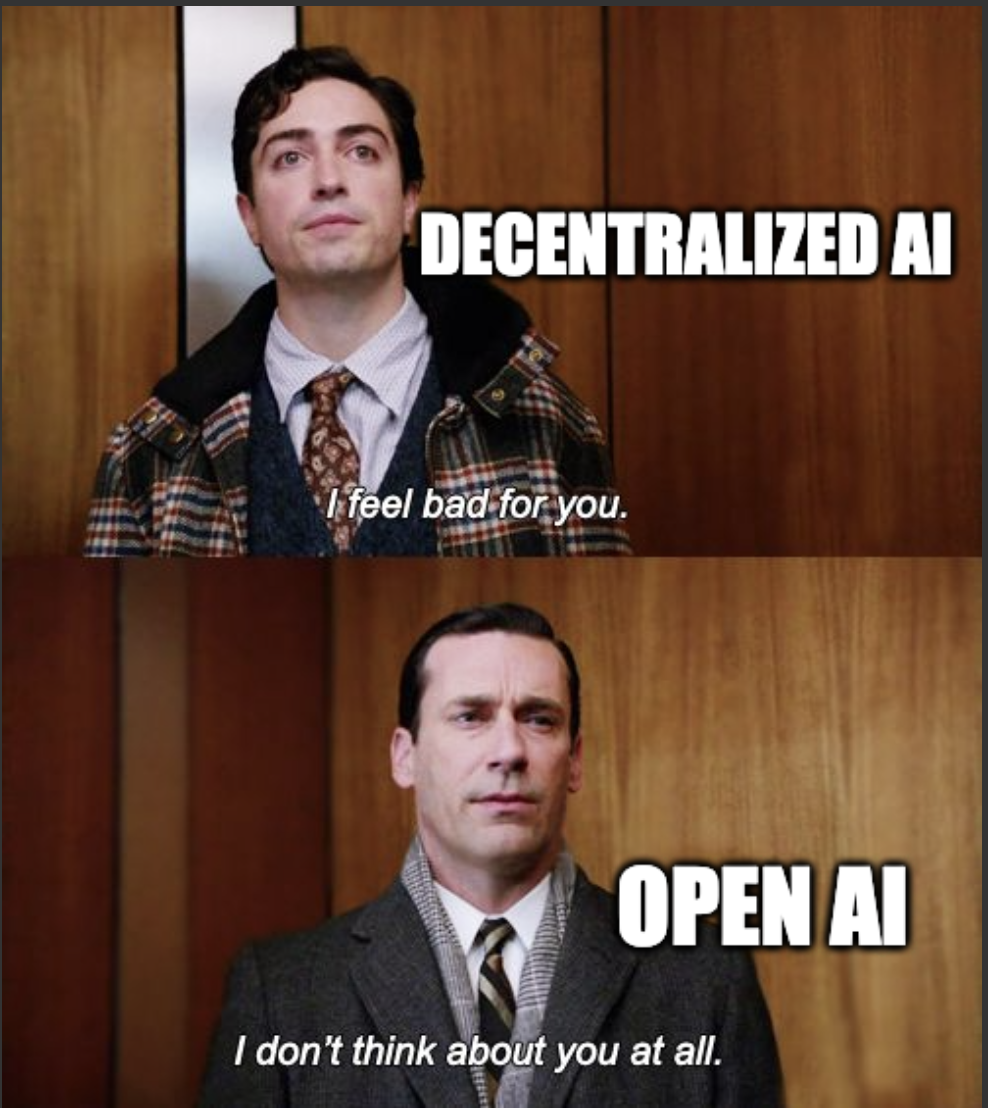
But I’ve spent the past year meeting with teams, reviewing hundreds of projects, and watching closely while everyone looked away. Beneath the hype cycle’s wreckage, I’m seeing real progress and evidence that Crypto x AI isn’t dead, but maturing. These areas have moved beyond hype and are showing early signs of working:
- Decentralized training infrastructure is starting to work at scale.
- Programmable money for AI agents is solving the payment and capital formation areas of AI.
- Crypto is enabling dataset aggregation and coordination for hard-to-access, frontier training data.
- AI-native crypto workflows are embedding intelligence into existing primitives.
Decentralized Training Is Beginning to Have a Moment
A year and a half ago, I was deeply skeptical that you could coordinate GPUs scattered across the globe into anything useful for AI training. I was dead wrong, and this is now the area I’m most excited about.
Crypto and AI have always been linked through compute. Early in the Crypto x AI hype cycle, many GPU marketplaces emerged, leveraging crypto incentives to bootstrap their supply side. However, this supply fell short of AI companies’ requirements. For most workloads, providers need high uptime, performance guarantees, and service license agreements (SLAs) that consumer hardware can’t deliver. Beyond that, running state-of-the-art open-source models requires costly A100s or H100s and data center infrastructure. Many companies choose hyperscalers and neoclouds that offer superior reliability and AI services over marginal cost savings.
But I believe the real opportunity for compute and crypto goes beyond being a marketplace. The real opportunity is using crypto rails to transform unreliable, heterogeneous hardware and supply into something economically viable. With the right systems, you can unify messy supply (spot instances, mixed vendors, and preemptible compute) into training state-of-the-art models. Until now, training has required centralized compute due to the amount of resources, which creates gatekeeping in large research labs and limits who can participate or innovate. Decentralizing the training process can unlock not only new supply, but also enable open systems and participation that centralized providers have no incentive to build.
And it’s starting to work. Recently, Pluralis ran the first permissionless training swarm with over 1,000 nodes across 198 cities around the globe. While an 8B model may not sound impressive, this type of decentralized training run, which coordinated heterogeneous hardware across the internet, was something the AI research community said was impossible just a year ago.
Link: https://dashboard.pluralis.ai/
A slew of promising new decentralized training research strengthens my optimism.
Pluralis and Prime Intellect both had papers accepted at NeurIPS and ICML this year, the two most respected AI conferences. Prime Intellect has trained a 32B model (INTELLECT-2) through globally distributed, permissionless RL, while Nous Research has demonstrated over-the-internet distributed training methods (DisTrO). These advancements are significant because they’re proving skeptics wrong, unlocking a new supply side for training and creating a real alternative to centralized labs. Unreliable, fragmented hardware that couldn’t meet AI requirements can now meaningfully contribute.
Decentralized training won’t produce frontier models tomorrow. But it’s creating an alternative to centralized labs, enabling anyone to participate in truly open AI development. Just as Bitcoin went from hobbyists mining in garages to industrial data centers, decentralized training is following the same path from experimental to viable.
It’s early. But the arc is undeniable.
Programmable Money for AI
Major AI players are adopting stablecoins. Anthropic partnered with Tempo, Stripe and Paradigm’s blockchain, as a design partner. Cloudflare announced its own stablecoin to monetize site protection from bots and agents, building a new payment layer.
It’s not too hard to see why. As AI agents interact with more APIs, datasets, and services, orchestrating payments will become a nightmare. Managing API keys, handling microtransactions, dealing with banking oversight, and settling payments in real time will add friction. Stablecoins offer a cleaner solution, enabling cheaper costs (especially for microtransactions), instant settlement, and less infrastructure overhead.
Stablecoins are clearly working for reducing financial payment friction; they already process over $3T in monthly volume, and the market has grown to over $300 billion in circulation. With AI agents emerging as economic actors and the need for instant, programmable payments accelerating, the intersection is inevitable.
The x402 standard from Coinbase demonstrates the trajectory of agentic stablecoin payments. By embedding stablecoin payments directly into HTTP, it enables seamless micropayments for AI API calls. In just three months, the protocol has grown to over 1m+ transactions across thousands of participants, early proof that the crypto infrastructure for AI-native payments is taking hold.

The numbers are still small for the total volume that agents will enable, but crypto is emerging as a tool to enable more efficient monetization and coordination for agents. Major tech firms are moving quickly to integrate. Google integrated x402 into its own Agent Payments Protocol (AP2) and Agent-to-Agent (A2A) framework, enabling AI agents to pay each other with stablecoins.
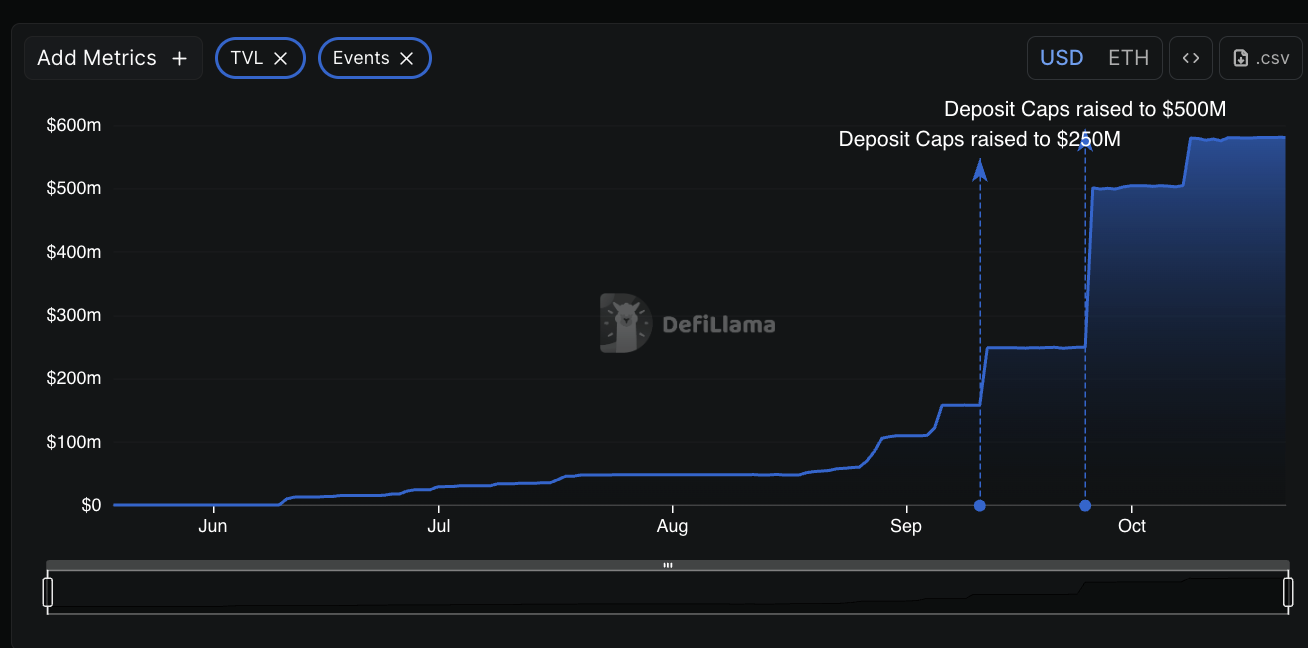
Beyond being a more efficient and transparent settlement layer, crypto is creating entirely new markets for AI resources. Crypto-native funding mechanisms offer novel ways to bootstrap AI projects and surface demand that traditional finance can’t easily replicate. Even OpenAI reportedly explored launching a token in its early days to fund operations. As AI infrastructure becomes more capital-intensive, tokenization and DeFi primitives are well-suited to bootstrap these emerging asset classes. DeFi primitives can turn AI resources into tradable, composable assets. USD.AI is one example. The protocol has grown past $580M in TVL as the world’s first compute-backed stablecoin, enabling AI companies to borrow against GPU hardware with faster approval times than traditional lenders.
Similar primitives are emerging for tokenized compute and datasets that can be lent, staked, or used for yield. DeFi excels at bootstrapping capital for novel assets and AI resources; eventually, agents themselves are a natural fit.
AI Is Being Embedded into Crypto Trading Workflows
It’s still early. Very few (if any) Crypto x AI companies are generating the kind of revenue AI companies are throwing off right now. But crypto has already proven it can scale to billions quickly. Companies like Axiom hit $100M ARR faster than almost any startup in history. Yet despite this, crypto UX is terrible, and the workflows are painfully manual. There’s a huge opportunity to embed and verticalize AI into these existing revenue engines.
We’re already seeing this play out across a spectrum. Companies like Meridian are embedding AI directly into trading terminals, making interfaces smarter. Dawn is focused on AI strategies and code generation, enabling traders to build automated strategies. Platforms like Context use AI agents to autonomously create and resolve prediction markets at scale, enabling tradable markets that would be impossible to coordinate manually.
On the far end of the spectrum, AI agents are now managing real capital autonomously. Giza has processed over $1B+ million in transaction volume, with AI agents autonomously managing $25 million in assets. Recently, research lab Nof1 launched Alpha Arena, giving six different AI models $10,000 each to autonomously trading perps on Hyperliquid. Within days, various LLMs were up significantly, demonstrating that just maybe LLMs can execute trading strategies without human intervention. AI can democratize institutional strategies, and crypto, already finance’s frontier, offers the proving ground. As AI matures, crypto’s transparency, verifiability, and capital sources make it the natural home for autonomous agents and wealth management.

Crypto Enables Access to Frontier Data
Multiple projects are generating real revenue by using crypto rails to access datasets that traditional brokers can’t reach.
Customers don’t care about crypto or decentralization. They care about acquiring frontier data to train their models. And there are plenty of data types that are difficult and/or expensive to generate, whether in robotics, voice, or specialized expertise. Crypto is good at coordinating resources to generate hard-to-reach supply. Tokens and stablecoins enable a distributed supply side to earn, which creates more data. Sapien, a data labeling company, is proving this. It has coordinated 1.9 million contributors across 110+ countries to deliver 187.8 million labeled data points. This scale has allowed it to partner with top AI labs.
The Crypto x AI Opportunity Is Real…But It Will Take Time
Strip away the hype, and the reason to use crypto in AI is straightforward: coordinate distributed resources, bootstrap supply for net-new products, enable capital formation, pay anyone anywhere instantly, and align contributions with upside.
There may not be a billionaire AGI onchain yet. But after a year of watching the space mature, I believe more than ever that the intersection of Crypto x AI is one of the most promising areas in all of crypto. It may take a few years to get there, but the intersection is very real. If you’re working on any of this, or if you see a different path forward for Crypto x AI, let’s talk.
All information contained herein is for general information purposes only. It does not constitute investment advice or a recommendation or solicitation to buy or sell any investment and should not be used in the evaluation of the merits of making any investment decision. It should not be relied upon for accounting, legal or tax advice or investment recommendations. You should consult your own advisers as to legal, business, tax, and other related matters concerning any investment. None of the opinions or positions provided herein are intended to be treated as legal advice or to create an attorney-client relationship. Certain information contained in here has been obtained from third-party sources, including from portfolio companies of funds managed by Variant. While taken from sources believed to be reliable, Variant has not independently verified such information. Any investments or portfolio companies mentioned, referred to, or described are not representative of all investments in vehicles managed by Variant, and there can be no assurance that the investments will be profitable or that other investments made in the future will have similar characteristics or results. A list of investments made by funds managed by Variant (excluding investments for which the issuer has not provided permission for Variant to disclose publicly as well as unannounced investments in publicly traded digital assets) is available at https://variant.fund/portfolio. Variant makes no representations about the enduring accuracy of the information or its appropriateness for a given situation. This post reflects the current opinions of the authors and is not made on behalf of Variant or its Clients and does not necessarily reflect the opinions of Variant, its General Partners, its affiliates, advisors or individuals associated with Variant. The opinions reflected herein are subject to change without being updated. All liability with respect to actions taken or not taken based on the contents of the information contained herein are hereby expressly disclaimed. The content of this post is provided “as is;” no representations are made that the content is error-free.