The 0-to-100 Guide on Stablecoin Designs and Risks
Originally published on Twitter on May 12, 2022
Read this article to go from 0 to 100 on stablecoin designs and risk.
First, what are stablecoins?
A stablecoin is a crypto asset whose price is “pegged” to the reference price of a reserve asset. The most popular reserve asset for stablecoins is one US dollar.
Stablecoins have a combined market cap of more than $170B. A look at the market prices of the top 10 stablecoins on CoinGecko and we can see that not all of them are functioning properly. Why is that the case? To understand why, we need to understand how stablecoins work.

How do stablecoins work?
The best framework I’ve seen was published by Ariah Klages-Mundt and a team of DeFi researchers in 2020 in this research paper. Let’s break down the core concepts.
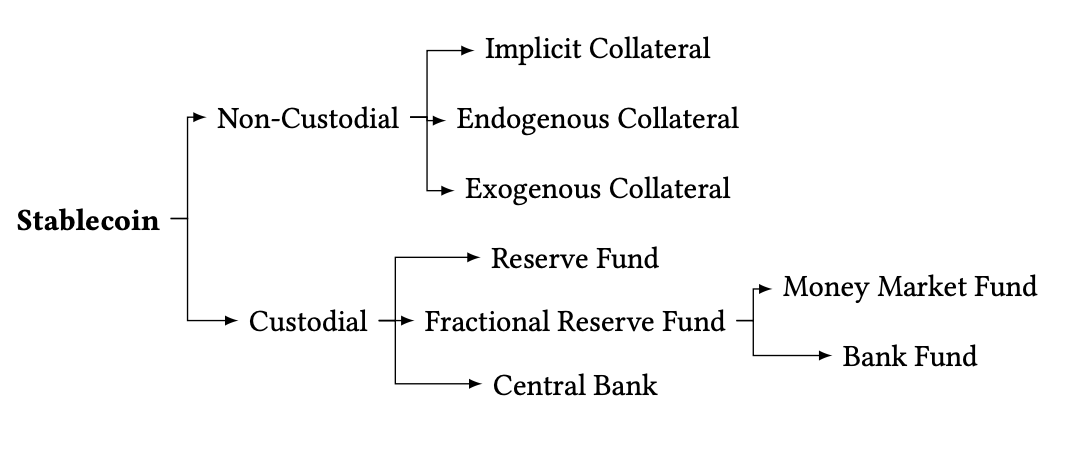
There are two major classes of stablecoins:
- Custodial: entrusted by off-chain collateral assets like fiat dollars that sit in a bank. Requires trust in third party.
- Non-custodial (aka decentralized): fully on-chain and backed by smart contracts & economics. No trusted parties.
 Custodial stablecoins
In custodial stablecoins, custodians hold a combination of assets (currencies, bonds, commodities, etc.) off-chain, allowing issuers (possibly the same entity) to offer digital tokens of a reserve asset. The top 2 custodial stablecoins today are USDT and USDC.
There are 3 types of custodial stablecoins.
- Reserve Fund: 100% reserve ratio. Each stablecoin is backed by a unit of the reserve asset held by the custodian.
- Fractional Reserve Fund: the stablecoin is backed by a mix of both reserve assets and other capital assets.
- Central Bank Digital Currency (CBDC): a digital form of central bank money that is widely available to the general public. CBDCs are in their nascency as today only 9 countries/territories have launched them, many of them small.
Custodial stablecoins have three major risks:
- Counterparty Risk: fraud, theft, government seizure, etc.
- Censorship Risk: operations blocked by regulators, etc,
- Economic Risk: off-chain assets go down in value
*Each can result in the stablecoin value going to zero.
Non-custodial stablecoins
On the other hand, non-custodial stablecoins aim to operate without the societal institutions that custodial stablecoins rely on. They achieve this by creating an economic structure on blockchains enforced via smart contracts.
TL;DR economic structure + rational actors = price stability
There are 3 types of non-custodial or decentralized stablecoins.
- Exogenous Collateral: the stablecoin is backed by assets that have uses outside of the stablecoin system. The most prominent stablecoin in this category is DAI, which is backed by a number of crypto assets like ETH.
- Endogenous Collateral: an asset created with the purpose of being collateral for the stablecoin. Examples include Synthetix, whose token SNX collateralizes its sUSD stablecoin.
- Implicit Collateral (aka Algorithmic): Stablecoins without explicit collateral that instead use market mechanisms to adjust supply to stabilize price.
*UST was the most prominent algostable. I highly recommend reading this thread on its mechanics and blow up.
Non-custodial stablecoins have 5 major risks:
- Collateral: value < issuance
- Data Feed: system can’t price itself
- Governance: parameter failure
- Base Layer: underlying blockchain fails
- Smart Contract: hack leads to insolvency
*Each can result in the stablecoin value going to zero.
Algo stables like UST are especially susceptible to collateral risk because they are not explicitly backed by collateral. When there is a crisis in confidence, such as the overall crypto markets going down, it can lead to a bank run or “death spiral”.
This is when an algostable’s fractional liquid reserve is depleted by redemptions, causing its system to default and remaining liquid assets needing to be sold at a discount. This in turn depletes the system’s overall equity, resulting in a spiral that is hard to overcome.
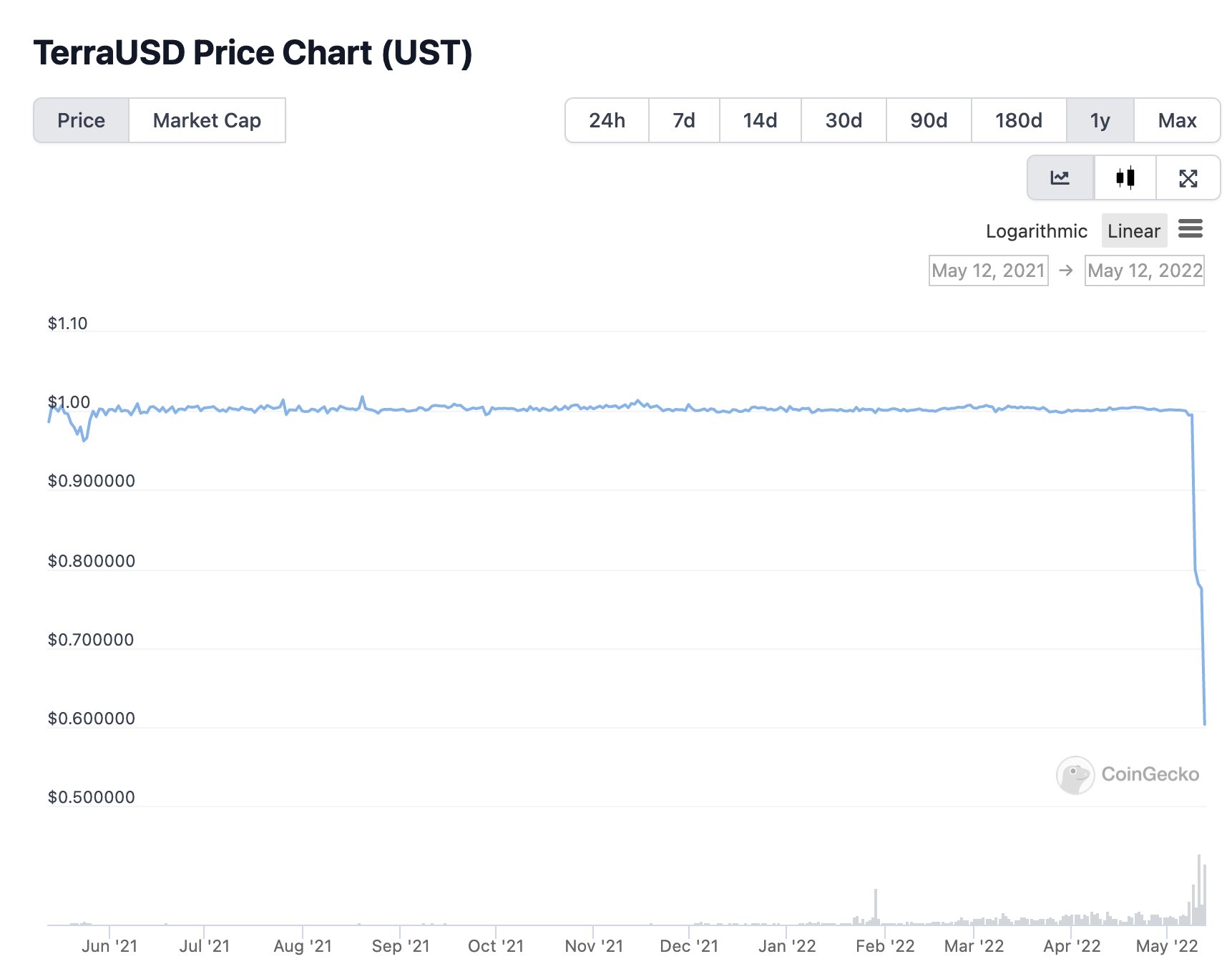
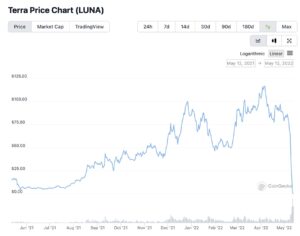
Algorithmic stablecoins are a brand new type of asset, and while most attempts to date have failed, not all of them have. It remains to be seen whether they are viable long-term at scale, however, many people in the crypto industry are optimistic.
Looking for more crypto fundamentals? Subscribe to my newsletter.
**
Originally published on Twitter on May 12, 2022
DisclaimerAll information contained herein is for general information purposes only. It does not constitute investment advice or a recommendation or solicitation to buy or sell any investment and should not be used in the evaluation of the merits of making any investment decision. It should not be relied upon for accounting, legal or tax advice or investment recommendations. You should consult your own advisers as to legal, business, tax, and other related matters concerning any investment. None of the opinions or positions provided herein are intended to be treated as legal advice or to create an attorney-client relationship. Certain information contained in here has been obtained from third-party sources, including from portfolio companies of funds managed by Variant. While taken from sources believed to be reliable, Variant has not independently verified such information. Any investments or portfolio companies mentioned, referred to, or described are not representative of all investments in vehicles managed by Variant, and there can be no assurance that the investments will be profitable or that other investments made in the future will have similar characteristics or results. A list of investments made by funds managed by Variant (excluding investments for which the issuer has not provided permission for Variant to disclose publicly as well as unannounced investments in publicly traded digital assets) is available at https://variant.fund/portfolio. Variant makes no representations about the enduring accuracy of the information or its appropriateness for a given situation. This post reflects the current opinions of the authors and is not made on behalf of Variant or its Clients and does not necessarily reflect the opinions of Variant, its General Partners, its affiliates, advisors or individuals associated with Variant. The opinions reflected herein are subject to change without being updated. All liability with respect to actions taken or not taken based on the contents of the information contained herein are hereby expressly disclaimed. The content of this post is provided "as is;" no representations are made that the content is error-free.